How the DynaVision D2™ is Rewiring the Brain: What Every Orlando Patient Should Know

Updated: Nov 19, 2025
When it comes to brain rehabilitation, precision matters. Every second of reaction time, every eye movement, and every decision the brain makes is part of a larger network of communication between neurons, muscles, and sensory systems. The DynaVision D2™ is one of the most advanced tools designed to measure, challenge, and improve those vital connections — and it’s transforming how functional neurology helps patients recover and optimize brain performance in Orlando and beyond.

What Is the DynaVision D2™?
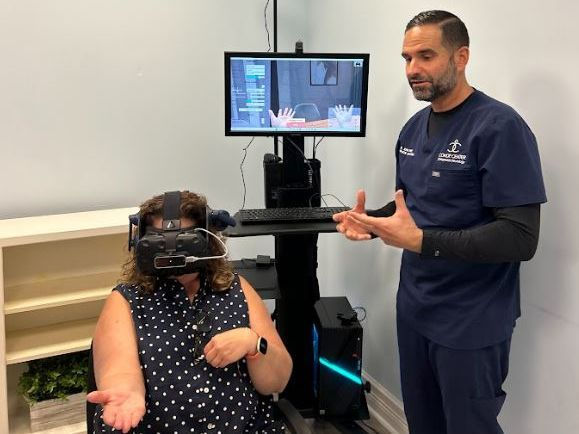
The DynaVision D2™ is an interactive, light-based training and assessment device that challenges the brain and body simultaneously. Patients stand before a large panel equipped with dozens of illuminated targets that light up in rapid, varied patterns. As each target lights up, the patient responds by pressing it as quickly and accurately as possible.
It may look like a simple reaction-time game, but the science behind it is sophisticated. The DynaVision D2™ stimulates multiple brain regions responsible for visual processing, hand-eye coordination, reaction speed, balance, and attention — all while providing measurable data about neurological performance.
You can explore more about the system on our DynaVision D2™ Cognitive Training page.
Why Functional Neurology Uses DynaVision D2™
At Functional Neurology Brain Center of Florida, the DynaVision D2™ is more than a tool — it’s a window into how the brain communicates with the rest of the body. In functional neurology, we look beyond symptoms to identify patterns of neurological imbalance. These imbalances often appear as changes in timing, coordination, and sensory integration.
The DynaVision D2™ allows clinicians to:
Quantify visual and motor performance
Reaction times and accuracy scores help pinpoint how efficiently the brain processes visual information.
Evaluate neurological pathways
Response patterns can reveal hemispheric asymmetries or areas of underactivity in the brain.
Guide individualized therapy
The data helps tailor exercises that specifically target the patient’s weak points, whether related to concussion recovery, cognitive fatigue, or performance enhancement.
Because every brain injury or dysfunction is unique, tools like DynaVision D2™ help ensure no two care plans are the same.
How It Works: Training Neuroplasticity
One of the key principles of functional neurology is neuroplasticity — the brain’s ability to reorganize itself by forming new neural connections. The DynaVision D2™ leverages this principle by forcing the brain to adapt to new stimuli at increasing levels of complexity.
During training:
Visual targets flash unpredictably across the board.
The patient must process where the light appears and coordinate a physical response.
Cognitive demand increases as timing speeds up or as dual-task challenges are introduced (such as solving simple math or spelling tasks during the light sequences).
This kind of multi-sensory engagement activates several key brain regions simultaneously:
The occipital lobe (visual processing)
The parietal lobe (spatial awareness)
The frontal lobe (decision-making)
The cerebellum (coordination and balance)
The result? Stronger communication between these networks — which translates to sharper thinking, faster reflexes, and improved body control.
Who Benefits from DynaVision D2™ Training
DynaVision D2™ therapy isn’t limited to athletes or patients with concussions. It’s used to support recovery and enhance performance across a wide range of neurological challenges.
Patients who often benefit include:
Concussion and traumatic brain injury (TBI) patients – to rebuild reaction speed, visual tracking, and cognitive endurance.
Individuals with dizziness, balance issues, or vestibular disorders – to retrain the brain’s balance systems through visual-vestibular integration.
Stroke survivors – to support the restoration of motor control and spatial awareness.
Patients with cognitive fatigue or “brain fog” – to stimulate faster processing and sharper focus.
Athletes and professionals – to enhance timing, coordination, and peripheral vision for peak performance.
To see the types of patients we commonly help, visit Who We Treat.
What a DynaVision D2™ Session Looks Like
Each session begins with an individualized assessment. The clinician calibrates the D2™ to your height, arm reach, and specific neurological goals. A baseline test measures your reaction speed, accuracy, and endurance across different zones of the board.
From there, training begins. Lights appear at various speeds and sequences, sometimes requiring alternating hand responses or simultaneous cognitive tasks. The challenge builds progressively — designed to push your neurological limits without causing fatigue or discomfort.
As sessions progress, most patients notice measurable improvements:
Faster reaction times
Better balance and coordination
Improved focus and sustained attention
Enhanced visual scanning and awareness
These aren’t just subjective experiences — the D2™ tracks every response, allowing you and your clinician to see quantifiable progress over time.
Why It’s Transformational for Concussion and TBI Recovery
Concussion symptoms often include slowed reaction time, dizziness, and difficulty with visual processing. The DynaVision D2™ directly targets those deficits through controlled, repeatable exercises that activate affected neural circuits.
Research and clinical use show that this form of therapy supports faster functional recovery by retraining visual-motor pathways disrupted during head injury. For many Orlando patients, it’s a breakthrough after months of feeling “stuck” with lingering symptoms.
To better understand whether this type of care aligns with your needs, read our in-depth article: Is Functional Neurology Right for You?
Measurable Results and Patient Confidence
One of the strengths of the DynaVision D2™ is its objective data. Progress isn’t based solely on how a patient feels; it’s visible in the numbers. Improvements in reaction time, hand-eye coordination, and endurance give both clinician and patient clear evidence of neurological change.
For athletes, those milliseconds of improvement can mean faster reflexes on the field. For patients recovering from brain injuries, they can mean safer driving, steadier walking, and greater confidence in daily life.
A Tool That Bridges Science and Real-World Function
The DynaVision D2™ bridges a critical gap between assessment and therapy. It provides immediate feedback that helps patients understand how their brain and body are working together — or where they may still need refinement.
At Functional Neurology Brain Center of Florida, our approach isn’t about chasing symptoms. It’s about restoring the communication pathways that allow your brain to perform at its best, using proven tools like the DynaVision D2™ to accelerate that process safely and effectively.
The Takeaway
For patients in Orlando seeking a deeper, data-driven approach to neurological recovery or performance, the DynaVision D2™ represents one of the most powerful training systems available. It combines the precision of technology with the expertise of functional neurology — a partnership that continues to redefine what’s possible in brain rehabilitation.
To learn more or schedule a consultation, visit our DynaVision D2™ Cognitive Training page.